
빛을 읽는 소자에 어떤 기능을 더할 수 있을까?What else can a light sensor do?
이미지 센서와 광학 웨어러블 기기의 출발점은 빛을 전기 신호로 바꾸는 반도체입니다. 흡수된 빛이 전하를 만들고, 소자 내부의 전기장이 그 전하를 이동시킵니다. 어떤 재료와 구조를 쓰느냐에 따라 검출할 수 있는 빛과 신호의 크기가 달라집니다.
여기에 기능을 더할 수 있습니다. 소자의 전도 상태를 기억하고 조절하면 센서 안에서 신호를 처리할 수 있고, 얇은 소자와 유연한 배선을 결합하면 곡면에도 놓을 수 있습니다. 재료, 회로, 기계적 구조를 함께 설계하는 이유입니다.
Image sensors and optical wearables begin with a semiconductor that converts light into an electrical signal. Absorbed light generates charge, and electric fields inside the device move that charge. Materials and device structures determine which light can be detected and the resulting signal.
A sensing device can do more. Retaining and adjusting its conductive state can enable signal processing within the sensor. Combining thin devices with flexible interconnects can let them fit curved surfaces. Both directions call for materials, circuits and mechanical structures to be designed together.
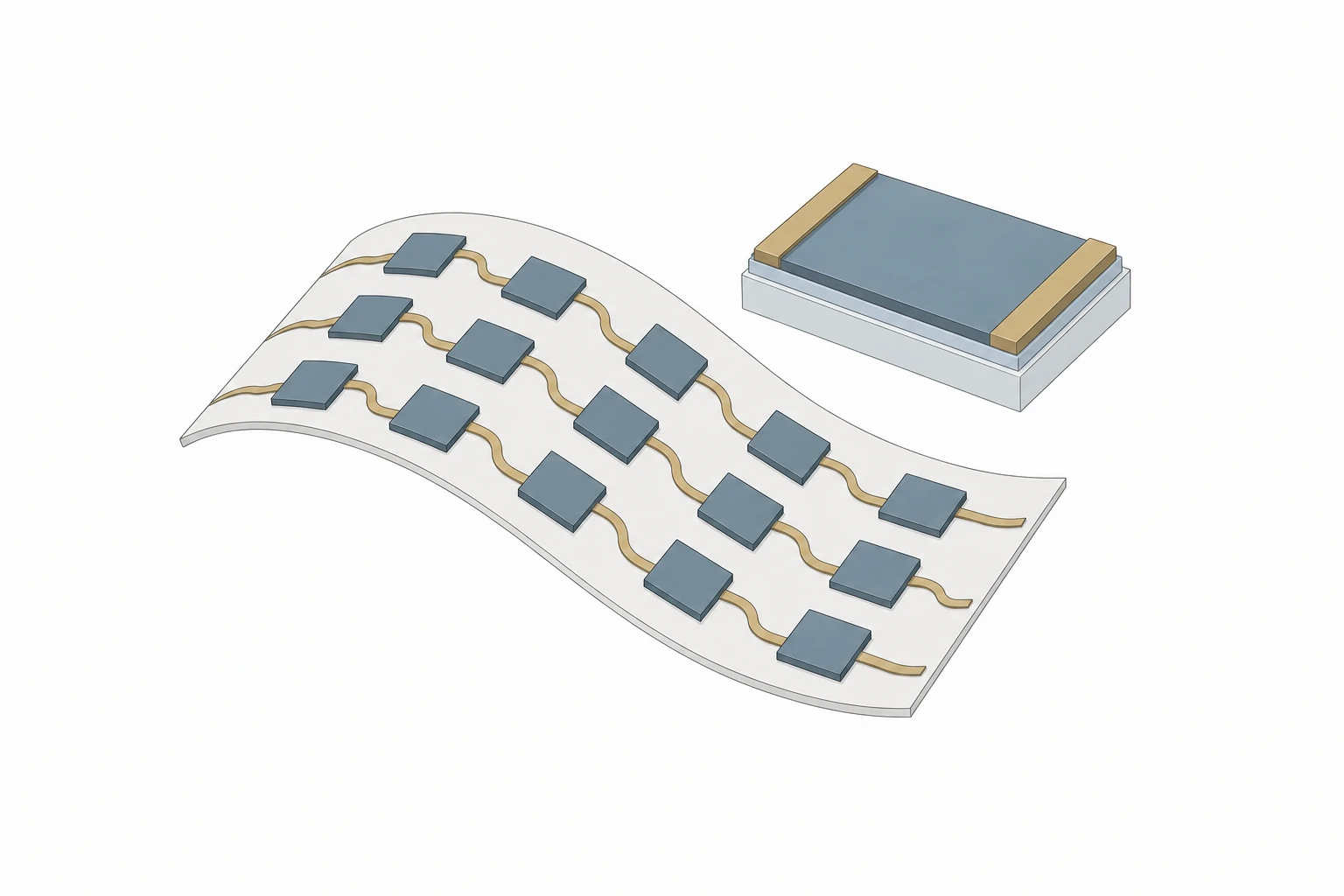
- 광전 변환Photoelectric conversion
- 반도체가 흡수한 빛은 이동 가능한 전하를 만들 수 있습니다. 이 전하를 모아 빛의 세기를 전기적으로 읽습니다.Light absorbed by a semiconductor can generate mobile charge. Collecting this charge allows light intensity to be read electrically.
- 게이트와 기억Gating & memory
- 게이트 전압은 트랜지스터의 전류를 조절합니다. 분극이나 포획된 전하가 남는 구조에서는 이전 입력의 흔적을 유지할 수 있습니다.A gate voltage controls transistor current. Structures that retain polarization or trapped charge can preserve a trace of earlier inputs.
- 유연한 구조Flexible structures
- 얇은 소자와 휘어지는 배선은 굽힘에 따른 변형을 줄이거나 분산합니다. 전기적 성능과 기계적 안정성을 함께 살펴야 합니다.Thin devices and bendable interconnects can reduce or redistribute strain during bending. Electrical performance and mechanical stability must be considered together.
PIXEL에서 탐구하는 질문Questions we explore at PIXEL
관련 연구는 빛을 읽는 개별 소자에서 실제 센서 시스템까지 이어집니다. 강유전체 게이트 광트랜지스터에서는 빛으로 기록한 전도 상태를 전기적으로 조절해 센서 내부의 영상 처리를 탐구했습니다. 무선 조직 산소계에서는 광센서, 유연한 패치, 무선 전력과 복사 냉각을 결합해 착용 환경까지 고려했습니다.The related work spans individual sensing devices and integrated systems. Ferroelectric-gated phototransistors were used to electrically adjust optically recorded conductance for in-sensor image processing. A wireless tissue oximeter combined optical sensing, a flexible patch, wireless power and radiative cooling to address the conditions in which a wearable operates.
함께 시작할 수 있는 연구Where you could begin
반도체 소자, 회로, 웨어러블 기술이 궁금하다면 빛을 비추며 전류의 변화를 측정하는 실험부터 접근할 수 있습니다. 소자 특성 분석과 간단한 회로·데이터 처리를 연결하면 재료의 변화가 시스템 기능으로 이어지는 과정을 볼 수 있습니다.If semiconductor devices, circuits or wearables interest you, a starting point is measuring how current changes under illumination. Connecting device characterization with simple circuits and data processing reveals how material behaviour becomes a system function.
논문으로 만나는 연구Explore the research through our papers
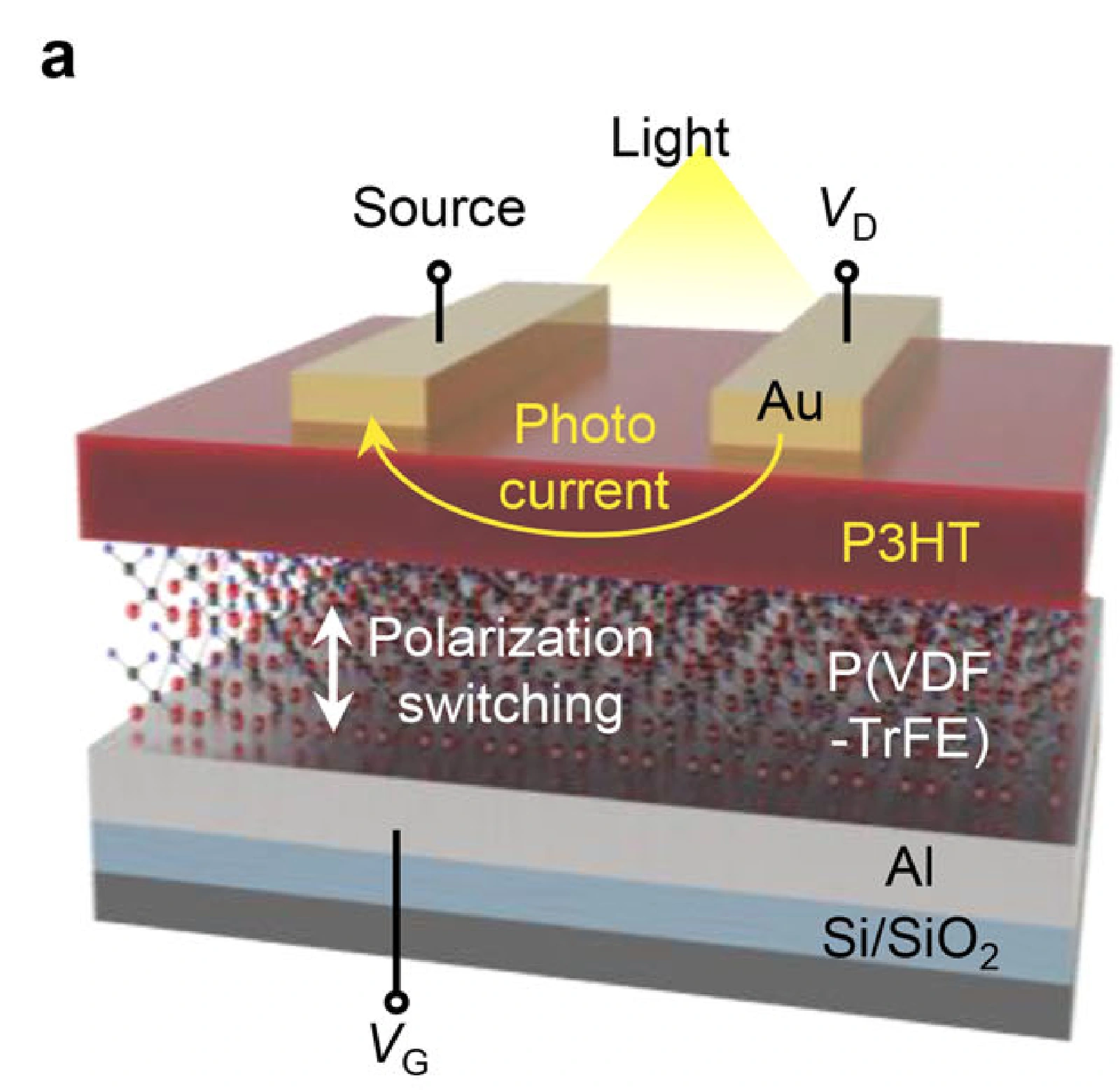
빛의 정보를 기억하고 조절하는 광트랜지스터A phototransistor that retains and adjusts optical information
빛으로 기록한 전도 상태를 강유전체 게이트로 조절했습니다. 조명이 달라져도 영상 정보를 적절한 범위로 보정하는 센서 내부 처리의 가능성을 보여 줍니다.A ferroelectric gate adjusts an optically recorded conductive state, demonstrating a route to recalibrating visual information within the sensor as illumination changes.
Advanced Materials 38, e03475 (2026)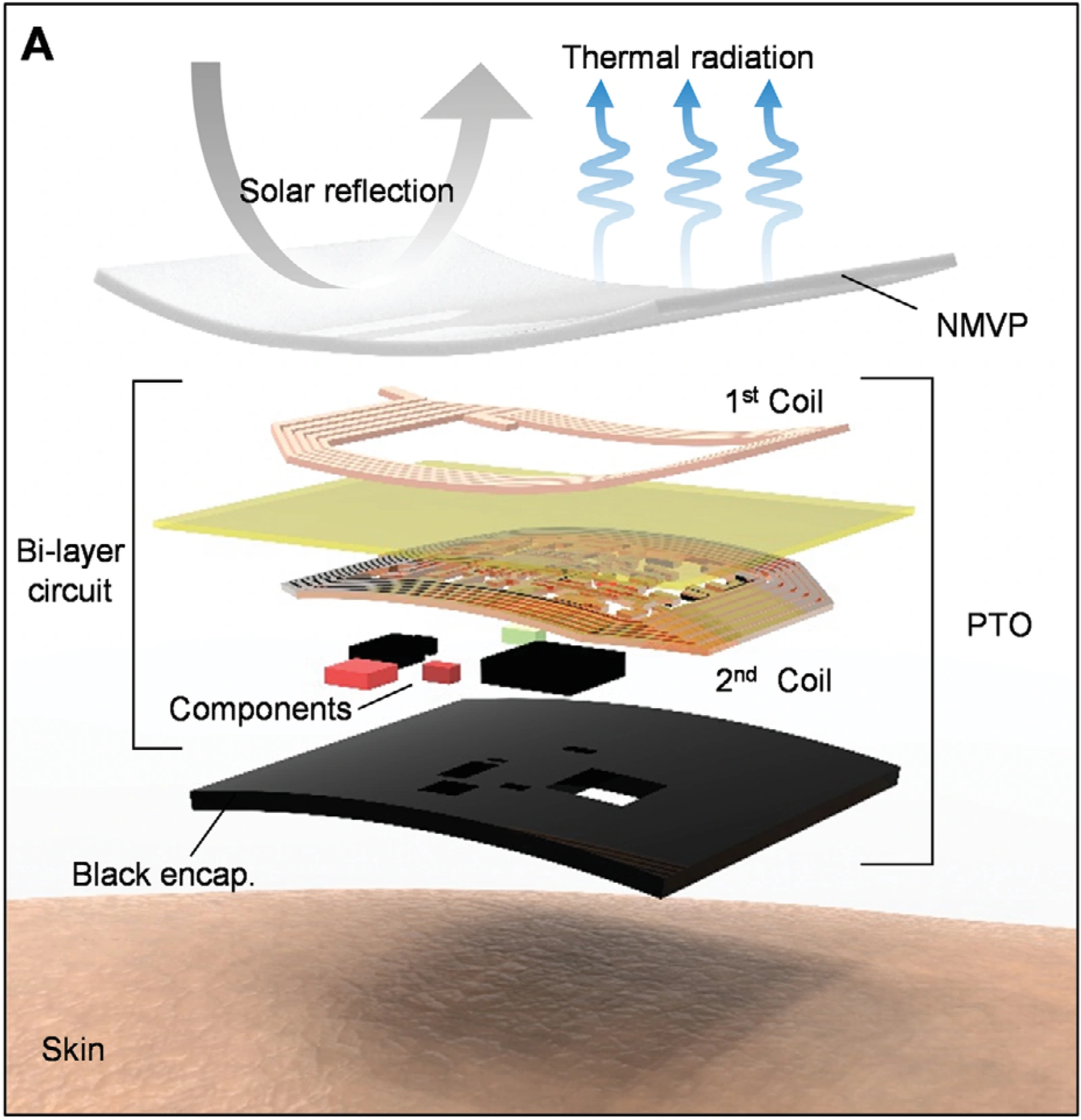
열 관리까지 고려한 무선 조직 산소계A wireless tissue oximeter with thermal management
두 파장의 근적외선으로 조직의 산소화 상태를 읽는 패치에 무선 전력과 복사 냉각을 결합했습니다. 센서의 성능뿐 아니라 야외 사용 시의 열 환경까지 함께 설계한 사례입니다.A patch that probes tissue oxygenation with two near-infrared wavelengths combines wireless power and radiative cooling, showing how sensor design extends to the thermal demands of outdoor use.
Advanced Science 8, 2004885 (2021)Related publications
-
Advanced Materials 38(1), 2503475 (2026) (link)
-
Flexible and Stretchable Light-Emitting Diodes and Photodetectors for Human-Centric Optoelectronics
Chemical Reviews 124(3), 768-859 (2024) (link)
-
Bio-Inspired Artificial Vision and Neuromorphic Image Processing Devices
Advanced Materials Technologies 7(2), 2100144 (2022) (link)
Co-first author
-
Outdoor-useable, wireless/battery-free patch-type tissue oximeter with radiative cooling
Advanced Science 8(10), 2004885 (2021) (link)
-
Nanoscale Research Letters 14, 110 (2019) (link)
-
Thin Metallic Heat Sink for Interfacial Thermal Management in Biointegrated Optoelectronic Devices
Advanced Materials Technologies 3(11), 1800159 (2018) (link)
-
Fabrication of Flexible Image Sensor Based on Lateral NIPIN Phototransistors
JoVE (Journal of Visualized Experiments) e57502 (2018) (link)
-
Parametric optimization of lateral NIPIN phototransistors for flexible image sensors
Sensors 17(8), 1774 (2017) (link)
Co-first author